
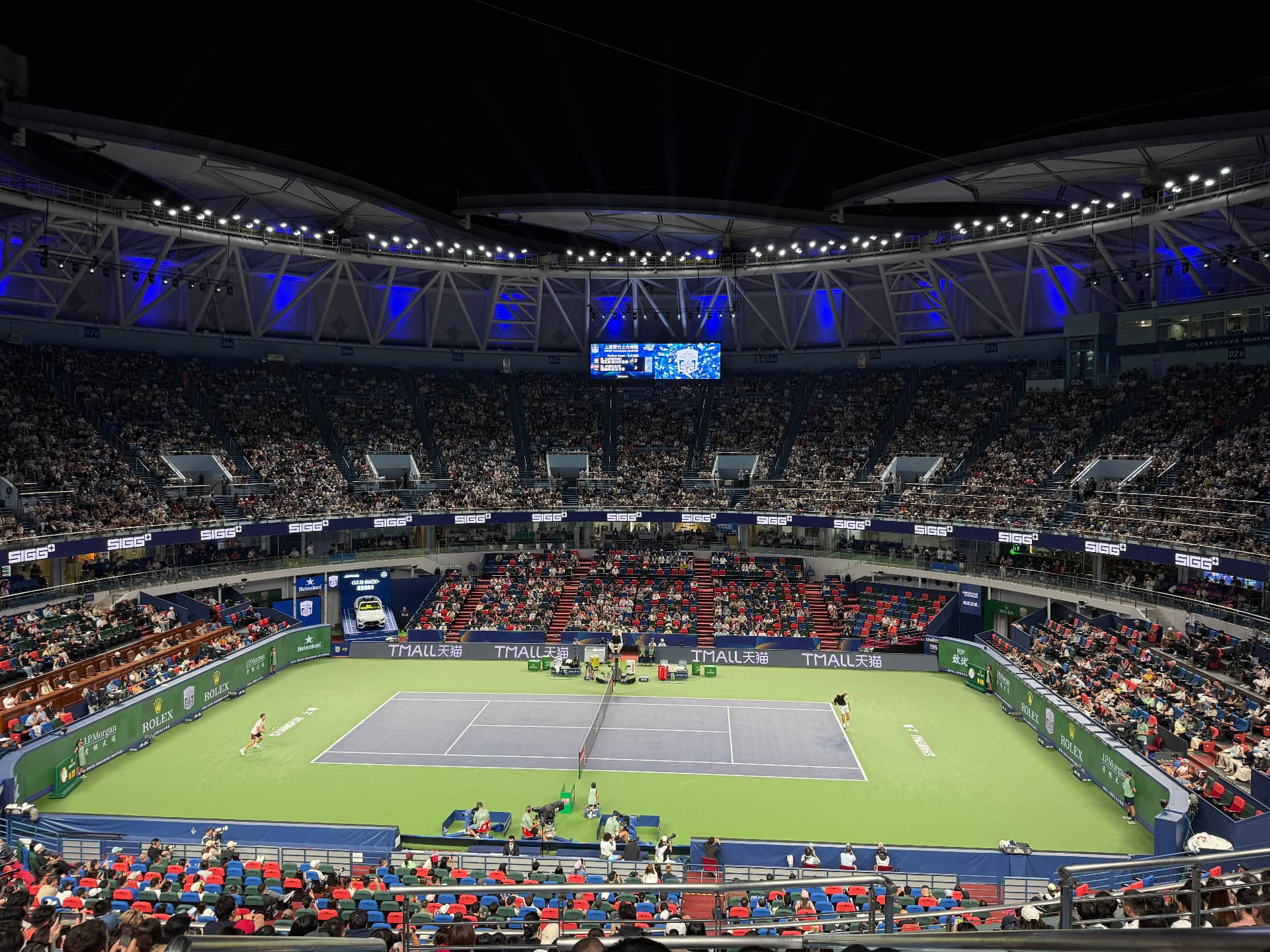
A full house at the Rolex Shanghai Masters during a night session.
Every October, one of the busiest places in world tennis is not a famous stadium in London or New York, but a tennis center on the outskirts of Shanghai. The Rolex Shanghai Masters, an ATP Masters 1000 event, brings the sport’s leading players to the city and fills its stands with fans from across China and around the world. In October 2026, I had the chance to see it from a different angle: not from a seat in the crowd, but as a volunteer with a badge around my neck and a very practical job to do.
I took part as a student of East China University of Science and Technology (ECUST) and as the leader of our International Students Tennis Club. This is an account of what that week looked like from the inside, and of what it suggests about the opportunities open to ECUST students who are willing to step forward.
Guiding the way
My role was to guide guests to the venue and around the grounds. It sounds simple until you see the site. The tennis center is far larger than television coverage suggests, with a main stadium, multiple show courts, practice courts, and walkways that all look alike to a first-time visitor. Over the course of the event, I answered the same handful of questions hundreds of times: Where is the main stadium? Which court is the practice session on? How do I find my seat?
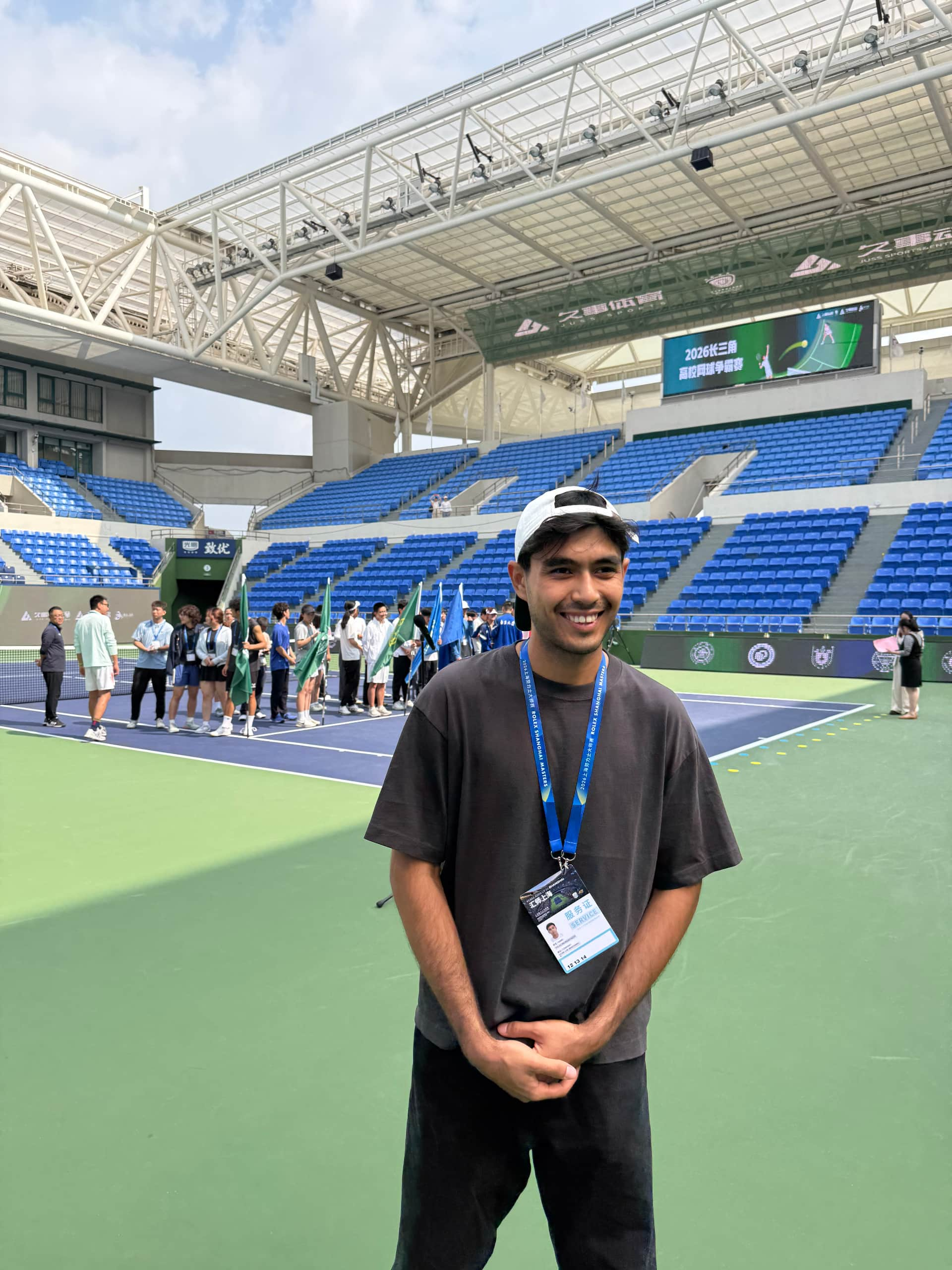
Service badge on, ready for the day.
Those questions were asked in many accents and languages. Some guests were seasoned tennis followers who knew exactly which player they had come to see; others were visiting for the first time and simply wanted a friendly face to point them in the right direction. By the second day I knew the layout by heart. It was a small job, but it taught me that hospitality at a major event is a skill: staying calm, being clear, and making a stranger feel welcome in under a minute.
Before the gates open
My favorite hours were the early ones. In the morning the main stadium is almost silent. Staff test equipment, courts are prepared, and the rows of empty seats give the building a calm that is hard to imagine once play begins. Then the gates open, and within an hour the whole complex is alive with movement and conversation.
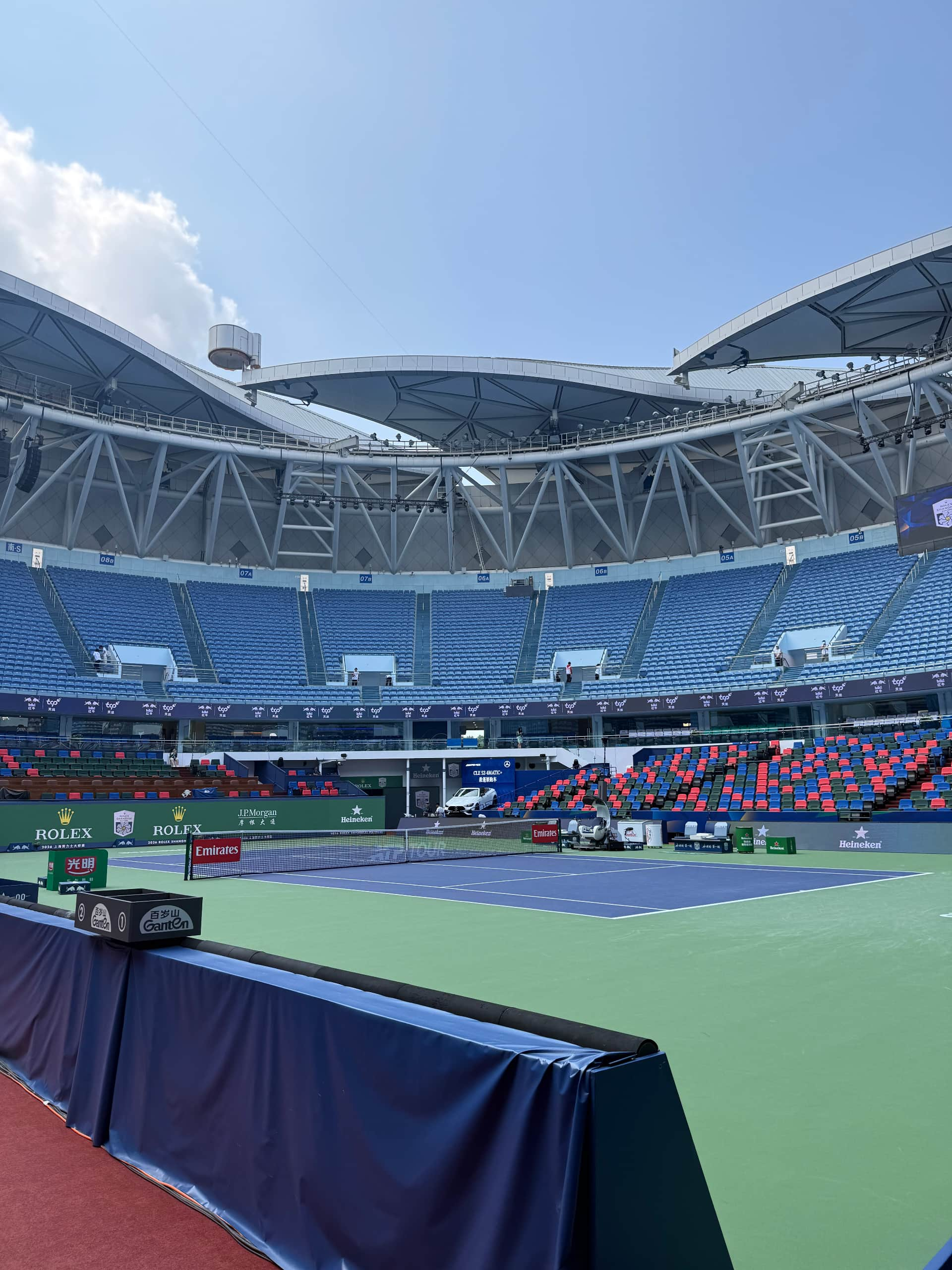
Center court in the quiet hours before the crowds arrive.
Close to the game
The practice courts were what surprised me most. Away from the roar of the main stadium, you can stand close enough to hear the ball come off the strings. Professional tennis looks fast on screen, but in person it is faster and more precise: the footwork, the rhythm between points and the level of concentration are all things a broadcast can only partly capture. For someone who plays regularly, this was an education in itself.
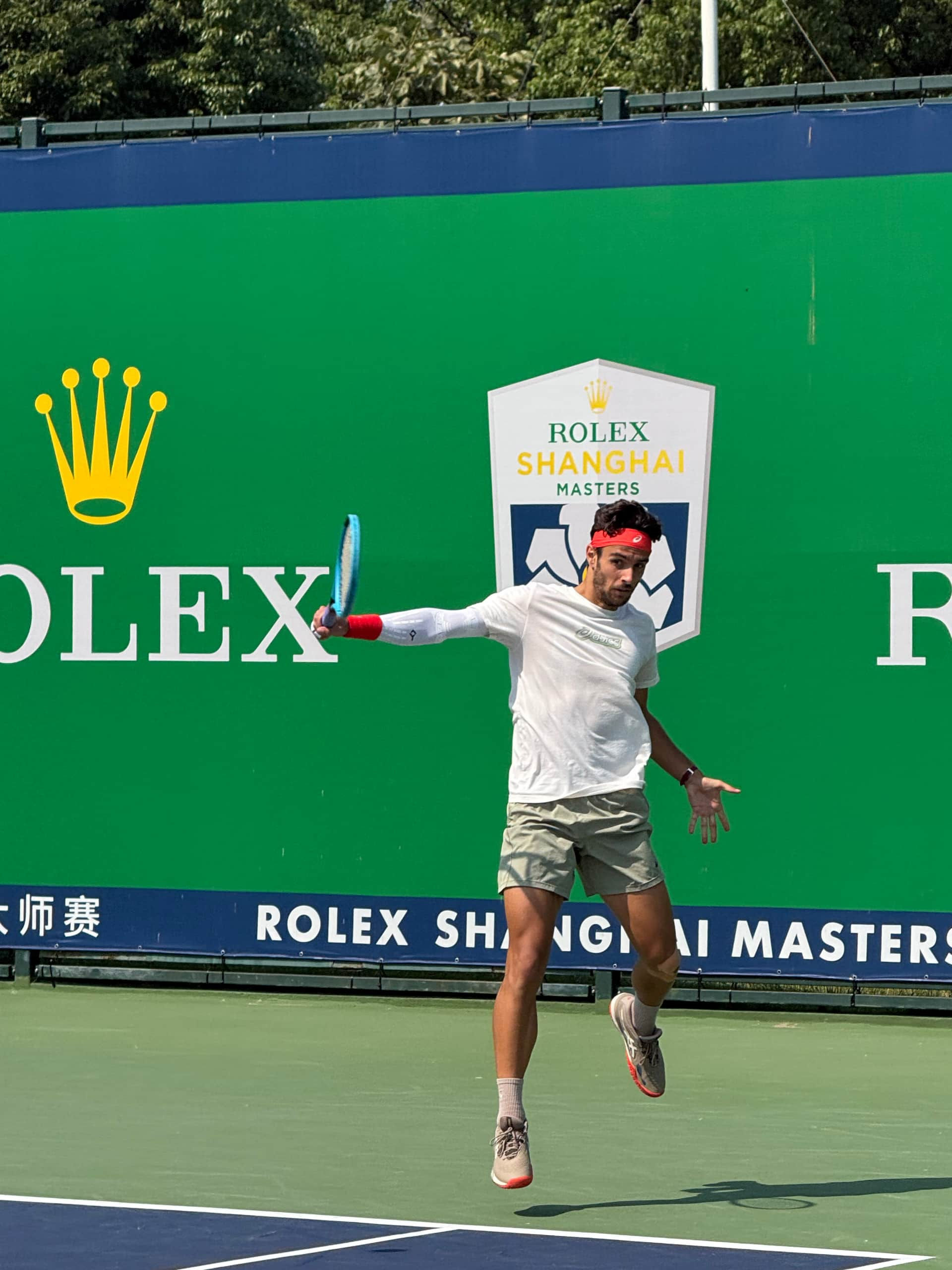
Practice courts: a few meters from world-class tennis: Lorenzo Musetti’s iconic one-handed backhand.
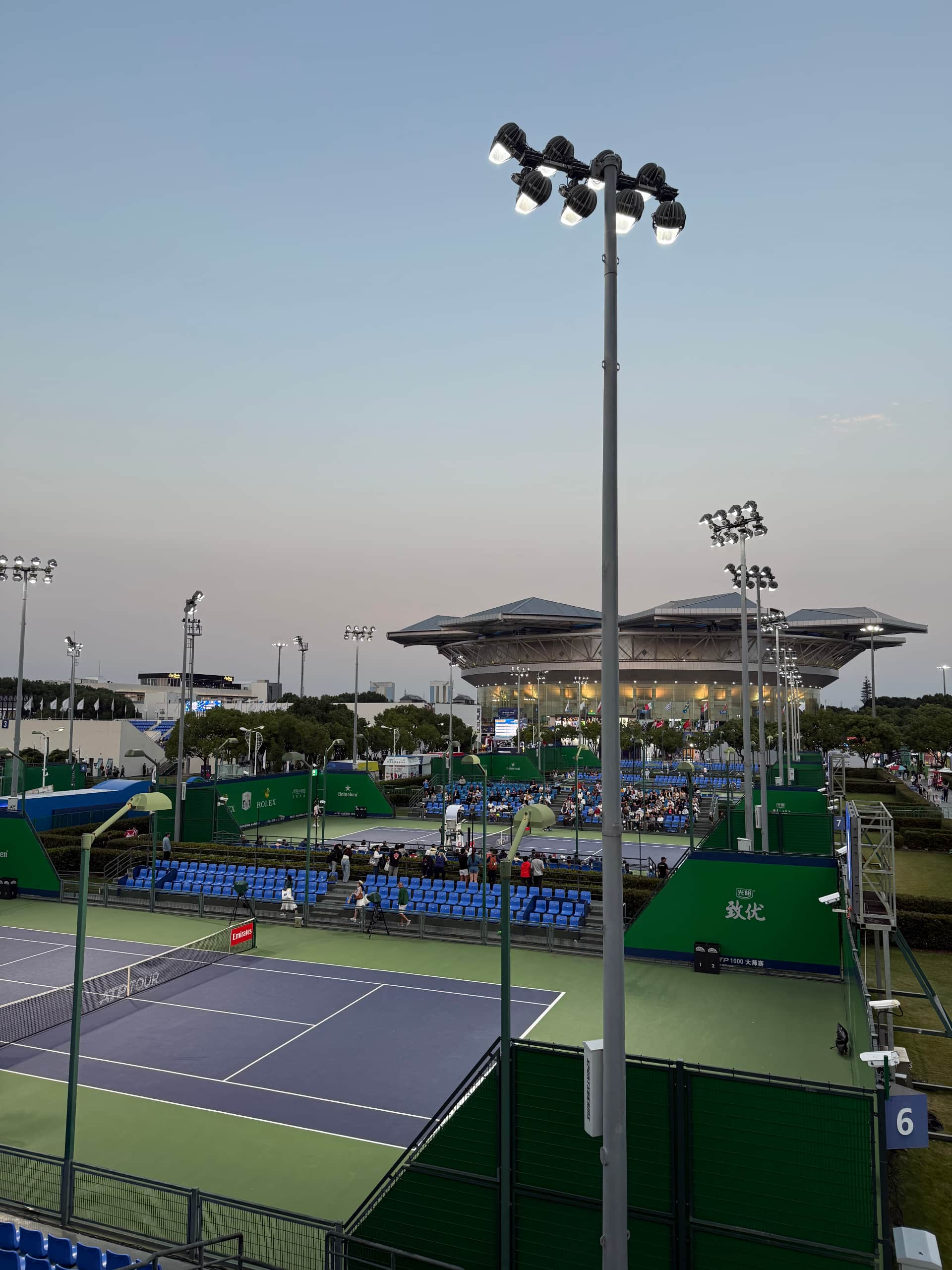
The walk between the outer courts and the main stadium, which I covered countless times.
Under the lights
As evening arrives, the atmosphere changes. The floodlights come on, the stands fill, and the stadium takes on a different character altogether. After a long day of walking guests across the grounds, I was able to watch a match at the highest level of the sport from the stands. Moments like the one below, a serve caught at its highest point, stay with you. They also have a way of changing how you think about your own game.
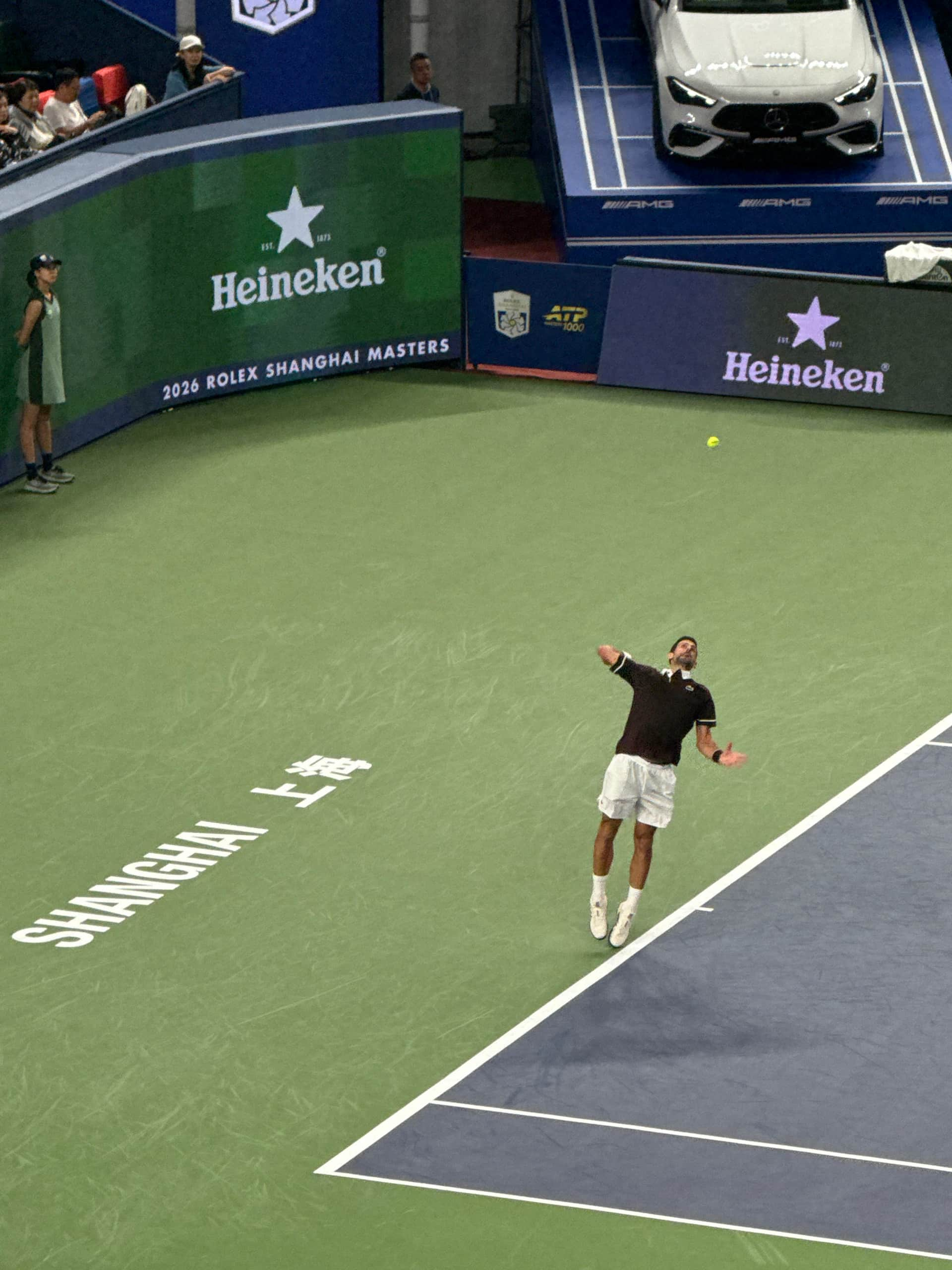
A serve by Novak Djokovic in mid-air during an evening match.
A stage for university tennis
The Masters is not only about professionals. The same courts also host university tennis events, and during my time there I saw student teams gathering on the stadium court with their university flags. For most of those students, it was the first time they had played in an arena of that size. It was a reminder that the line between watching elite sport and taking part in it can be thinner than it seems, especially for students whose universities build connections with such events.
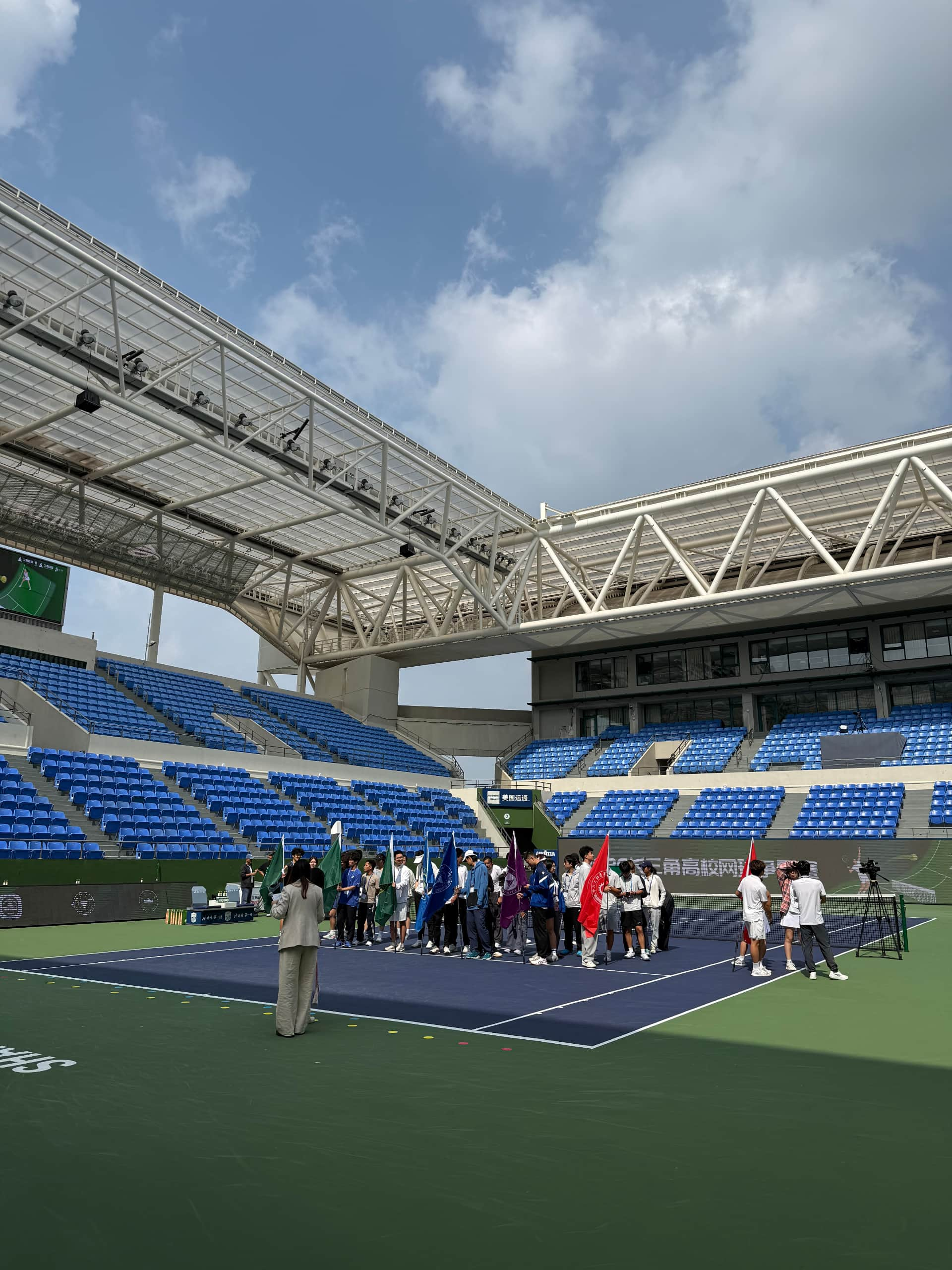
University teams on the stadium court for the Friendly University Tournament, held alongside the Masters.
Where it started: the August friendship tournament
This experience did not appear out of nowhere. In August 2026, I represented ECUST as an athlete in the International University Tennis Friendship Invitational and Cultural Exchange Week, held on our own courts. 54 players and coaches from 11 universities across 10 countries came together to compete, and just as importantly, to get to know one another.
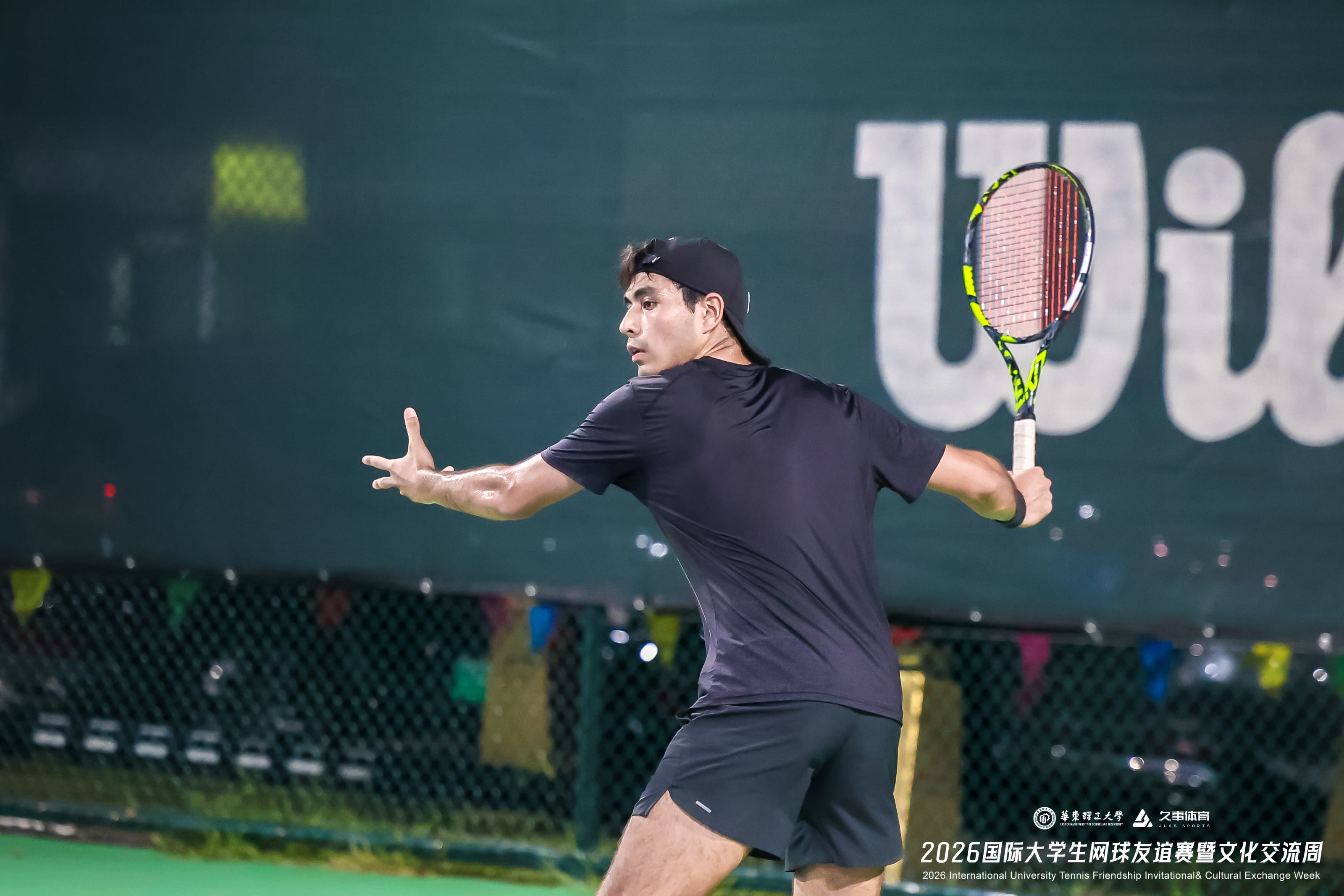
Competing for ECUST at the 2026 International University Tennis Friendship Invitational & Cultural Exchange Week.
What stayed with me from that week was less the scoreboard than what happened off court: the shared meals, the conversations across languages, and the invitations to play again. A friendly tournament of this kind builds exactly the confidence and connections that help students say yes when a larger opportunity comes along.
A leader’s perspective
As the leader of the ECUST International Students Tennis Club, I see my role as helping students find their way to experiences like these. International students often arrive in a new city with enthusiasm for a sport they love but little idea of how to get involved locally. Regular training sessions and club activities give them a community first. From there, events such as the friendship tournament and the Shanghai Masters become realistic next steps rather than distant ideas.
That is something I believe reflects well on ECUST as a whole. A university that encourages its students to take part in international events, whether as players, volunteers or hosts, gives them more than a line on a résumé. It gives them practical skills, new friendships and a clearer sense of what they are capable of.
Looking back
The Rolex Shanghai Masters showed me that a great sporting event is built by many people whose work is seldom seen: the staff who prepare the courts, the volunteers who guide thousands of visitors, the ball crew, the organizers. I am proud to have been one of them. I am grateful to ECUST for the support that made it possible, and I hope that more of our students, from every country and at every level of play, will have the chance to walk through those gates in the years to come.